
Your first time at the Primary Care Clinic is a huge milestone for you, whether it is a routine visit or not. The primary care clinic is a place where your entire healthcare journey should begin. It helps you stay ahead of preventive treatments, assists in managing your existing condition(s), and gives you guidance whenever things are not going right.
Your initial consultation lays down a lot of important groundwork. Not only do you make it possible for your physician to have your medical background, list of current medications, and risk factors but also allows him/her to create your baseline, thus making it easier for you to address issues early on.
This checklist will help you get prepared for this visit, and give you insight about what you need to talk about while there.
Before You Go: New Patient Checklist for a Primary care clinic
If you wish to make your initial appointment a success, prepare accordingly. Below is a list of documents you will need for your first visit:
1. Driver’s license and insurance information (if any)
2. List of all current medications, vitamins, and supplements (with dosage information)
3. Allergies (medication, foods, environments)
4. Medical history including previous surgeries and illnesses, hospitalizations
5. History in your family of diabetes, heart disease, cancer, hypertension, mental disorders
6. Vaccination history (if any)
7. Most recent lab reports or scans (if you have any)
8. Names of your specialists (if any)
9. Name and address of your pharmacy
10. List of symptoms and concerns and goals related to your health
Tip: Add a part at the beginning that highlights your “top 3” concerns. This guarantees that even if you have a hectic visit, the crucial things are covered, particularly at a primary care clinic setting.
Primary Care Clinic Check-In Process
When you arrive, the front desk will usually guide you through a check-in process that includes forms and basic updates.
You may fill out:
- Medical history forms
- Consent forms
- HIPAA/privacy paperwork
You’ll also likely confirm:
- Contact information
- Emergency contact
- Preferred pharmacy
It is better to arrive earlier than your scheduled appointment, because then you can manage your paperwork without feeling stressed. Being punctual would still make you feel rushed, since there are many forms to be filled out before the primary care clinic.
Vitals Assessment & Initial Screening
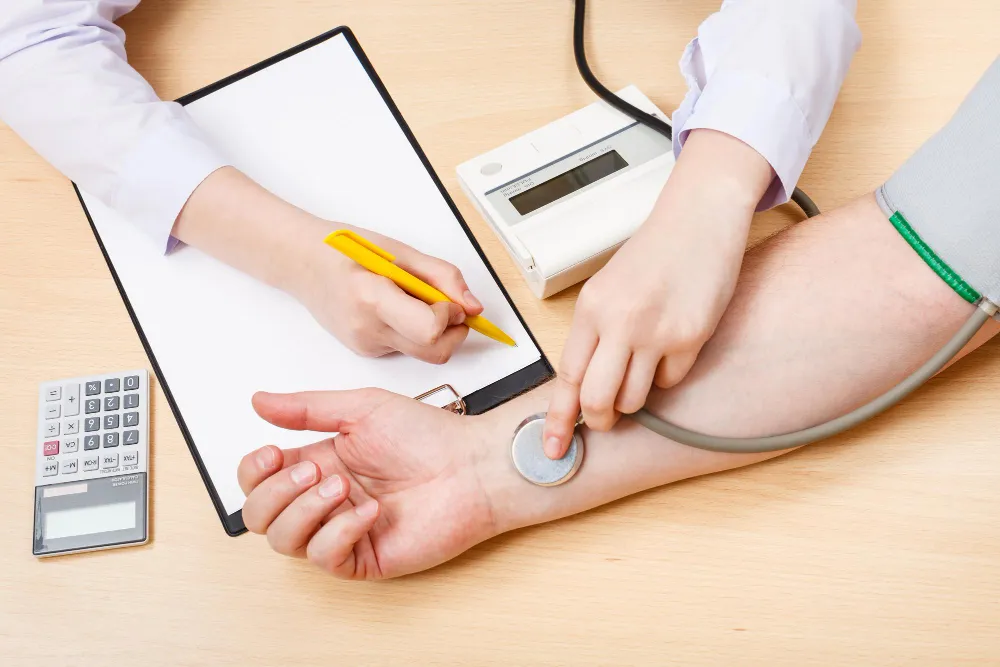
After check-in, a nurse or medical assistant typically brings you back for vitals and basic screening.
Common vitals include:
- Blood pressure
- Heart rate
- Temperature
- Oxygen level
They’ll also record:
- Height, weight, BMI
You may be asked questions about:
- Sleep quality
- Stress levels
- Diet and activity
- Tobacco or alcohol use
These questions are not used for assessment purposes. Their purpose is to evaluate your risk factors so that appropriate actions can be taken.
Meeting Your Provider: What They’ll Ask at a Primary care clinic
Once you meet your provider, the conversation usually starts with your main reason for the visit. Even if you’re there “just to establish care,” it helps to share what you want out of the relationship.
Expect questions like:
- Why have you visited our clinic today, and what are your primary concerns?
- What kind of medication do you take, and why?
- Are there any other diseases, operations, or hospitalizations in your medical history?
- Are there any cases of disease in your family history?
- Is your sleep, nutrition, exercise, and stress management good?
Another factor may be preventive care based on your age and medical condition.
Physical Exam: What Happens at a Primary care clinic
A first-visit physical exam is usually a general check of overall health, plus anything focused based on symptoms.
A general exam may include:
- Listening to your heart and lungs
- Checking your abdomen
- Looking at skin concerns (if relevant)
- Checking joints or mobility (as needed)
If you came in with a problem in mind, your health care provider may conduct a targeted examination of your problem.
It’s perfectly okay to ask questions while being examined. Should you feel uneasy, you can ask:
- “Could you tell me what you’re looking for?”
- “May I have a minute?”
- “I would like a chaperone to be present.”
You’re free to assert yourself.
Primary Care Lab Tests & Referrals
Depending on your history, age, and symptoms, your provider may recommend labs or tests during the first visit.
Common first-visit labs may include:
- Cholesterol
- Blood sugar
- Thyroid (as needed)
- Vitamin levels (as needed)
Sometimes imaging or specialist referrals are recommended if symptoms suggest something that needs deeper evaluation.
Before you leave, make sure you understand:
- Why the test is being ordered
- How you’ll get results (portal, call, follow-up visit)
- When you should expect results
- What happens if something is abnormal
Your Care Plan: Next Steps After the Primary care clinic Visit
A good first visit should end with a clear plan, not confusion.
Your plan may include:
Treatment plan:
- Medications (if needed)
- Lifestyle changes (sleep, nutrition, movement, stress)
- Monitoring symptoms at home
Preventive plan:
- Vaccines you’re due for
- Screenings based on age and risk
- Timing for annual checkups
You may also schedule follow-ups and learn how to message the clinic with questions between visits.
Questions to Ask at Your First Primary care clinic Visit
If you’re not sure what to ask, these questions cover the basics and help you leave with clarity:
- What screenings do I need this year?
- What vaccines am I due for?
- What lifestyle change would make the biggest impact for me right now?
- When should I come back?
- What symptoms should trigger a sooner visit?

FAQs
1) What do I need to bring for my first primary care appointment?
Be sure to bring your ID, insurance card (if any), a list of medications along with doses that you take, allergies, history, and any labs/imaging that you may have done recently.
2) Do I have to get labs done at my first appointment?
It may vary. In most cases, basic labs such as cholesterol or blood glucose will be ordered by the physician based on your age and other risk factors.
3) How do I handle nervousness?
It is better if you write down the 3 main things you want to discuss with your physician.
4) Can a walk-In clinic provide routine checkups?
Yes. A primary care or walk-in clinic can provide routine checkups, preventive screenings, and ongoing health monitoring based on your needs.
5) Are you accepting new primary care patients?
Yes. ValueCare Clinic accepts new patients and provides comprehensive primary care services for ongoing and preventive healthcare needs.
Conclusion: Get the Most Out of Your Primary care clinic
Your first appointment will be an important step toward establishing a good basis for the future. Should you prepare yourself and express your thoughts clearly, you are going to receive valuable advice that will guide you toward a realistic approach at a Primary Care Clinic.
Make sure you ask your questions and discuss all your symptoms and habits, because continuity in primary health care really helps in achieving good results. It may even become part of the reason for your improved well-being—especially with ongoing support from ValueCare Clinic.
Your Health Has a Home Base
A primary care clinic helps you stay ahead with preventive care, screenings, and a plan that fits your life, not just today’s symptoms.